

If you’re deciding between a 2 post vs 4 post lift for home garage use, you’re facing one of the biggest decisions in any home garage lift purchase. Both lift types can safely raise a vehicle for repairs or storage, but they differ enough in footprint, ceiling height needs, concrete requirements, and overall use case that the right choice really does depend on your specific garage and goals.
This guide compares 2 post vs 4 post lift for home garage scenarios side by side, covering repair work, vehicle storage, low-ceiling garages, beginner-friendliness, and long-term ownership. Requirements vary by lift model and vehicle weight rating, so always confirm the exact specifications for the model you’re considering, and professional installation is strongly recommended for either type.
Quick Answer
In short: two-post lifts are generally better for repair and service work because they give full access underneath the vehicle, while four-post lifts are generally better for storage, home detailing, and beginners because they’re simpler to drive onto and don’t require lifting points on the vehicle itself. Your best choice in the 2 post vs 4 post lift for home garage decision often comes down to whether you’ll use the lift mainly for wrenching or mainly for parking.
How Two-Post Lifts Work
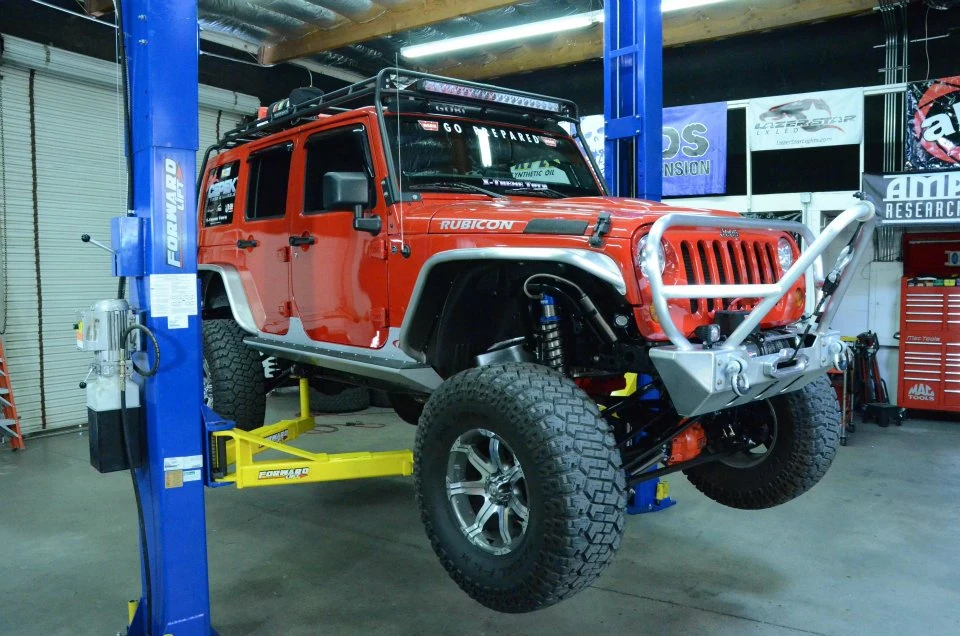
A two-post lift raises a vehicle using two columns and swing arms that connect to specific lifting points under the frame or pinch welds. This gives you unobstructed access to the underside of the vehicle, which is why most professional shops use two-post lifts for brake jobs, exhaust work, suspension repairs, and oil changes.
The tradeoff is that two-post lifts generally require a thicker, stronger concrete slab because the vehicle’s weight is carried through the two columns and their anchor bolts, and you need to know your vehicle’s correct lifting points to position the arms safely. They also tend to need slightly more ceiling height than some four-post models, though this varies by manufacturer.
How Four-Post Lifts Work
A four-post lift uses two long runways that the vehicle drives directly onto, similar to a ramp, then raises the entire platform. This makes four-post lifts easier and faster to use for someone who isn’t familiar with vehicle lifting points, and they’re a popular choice for home garages where the lift doubles as extra parking or storage space above another vehicle.
The tradeoff is reduced access to the underside of the vehicle for serious repair work, since the runways and crossmembers are in the way, unless the specific model includes a rolling bridge jack or similar accessory. Four-post lifts also take up a larger footprint on the garage floor.
2 Post vs 4 Post Lift for Home Garage: Side-by-Side Comparison
| Factor | Two-Post Lift | Four-Post Lift |
|---|---|---|
| Best For | Repairs and service work | Storage, parking, and easy use |
| Underside Access | Excellent | Limited without an add-on jack |
| Ease of Use | Requires knowing lift points | Drive on and go |
| Concrete Requirements | Typically stricter (see our 2-post concrete guide) | Often more forgiving, still confirm specs |
| Floor Footprint | Smaller | Larger |
Repairs vs Storage: Which Should You Prioritize?
If your main goal is doing your own repairs, brake jobs, or regular maintenance, a two-post lift is usually the better fit in the 2 post vs 4 post lift for home garage comparison, simply because of the unobstructed access underneath. If your main goal is parking an extra vehicle, storing a project car, or simply having more usable floor space, a four-post lift is typically the more practical option.
Which Lift Is Better for Each Job?
| Job | Better choice | Why |
|---|---|---|
| Brakes, tires and suspension | Two-post | The wheels hang free for full access. A four-post lift needs a rolling bridge jack to lift the wheels off the runways. |
| Engine or transmission removal | Two-post | Open underside access. Use tall support stands when removing heavy components, since the vehicle’s center of gravity shifts. |
| Oil changes and fluid checks | Either | Both give good access to drain plugs and filters. |
| Exhaust work | Either | The exhaust runs between a four-post lift’s runways, so both give good access. |
| Wheel alignment | Four-post alignment lift | Alignments are done with the vehicle on its wheels, on runways with turnplates and slip plates. |
| Storage or parking a second car | Four-post | Drive-on runways make stacked parking simple. |
| Detailing and bodywork | Either (four-post is more convenient) | The car stays on its tires and is easy to load. |
Capacity: Which Lift Handles Heavier Vehicles?
Capacity depends on the specific model, not the lift type. The two-post lifts we sell range from 9,000 lb (Direct Lift DL9, Forward Lift BP9) to 18,000 lb (Forward Lift DP18PRO), and our four-post lifts range from 8,000-lb storage lifts to the 14,000-lb Forward Lift CR14. Choose a lift rated comfortably above the weight of the heaviest vehicle you plan to lift. The table below compares popular home-garage models.
Popular Two-Post and Four-Post Lifts for Home Garages
Here are the two-post and four-post lifts home-garage buyers compare most often:
| Lift | Type | Capacity | Good fit for |
|---|---|---|---|
| Direct Lift DL9 | Two-post | 9,000 lb | Entry-level home service lift with a clear-floor design |
| Forward Lift I10 | Two-post | 10,000 lb | ALI Gold Certified lift for most cars, SUVs and light trucks |
| Forward Lift I12PRO | Two-post | 12,000 lb | Heavier trucks and SUVs |
| Direct Lift Pro Park 8S | Four-post | 8,000 lb | Free-standing storage lift with a caster kit, movable when unloaded |
| Direct Lift Pro Park 8 PLUS LONG | Four-post | 8,000 lb | Storage and parking with extended-length runways for longer vehicles |
| Direct Lift Pro Park 8 PLUS LONG, 2023 Diamond edition | Four-post | 8,000 lb | The 2023 Diamond edition of the PP8PL, with the same extended-length runways |
| Direct Lift Pro Park 9 PLUS | Four-post | 9,000 lb | ALI Certified storage and light-service lift |
Browse all two-post lifts and four-post lifts for current pricing.
Which Is Better for Beginners?
For someone new to using a car lift, four-post lifts tend to have a gentler learning curve since you drive on much like a ramp and don’t need to identify the vehicle’s correct lifting points. Two-post lifts require more care and knowledge to use safely, since the arms must be positioned at the manufacturer-specified points every time. Professional installation and a walkthrough from your installer are strongly recommended for either type, especially for first-time owners.
Low-Ceiling Garages
Ceiling height plays a role in this decision too. If your garage has limited overhead clearance, some four-post models and most low-ceiling two-post models are designed around reduced height needs — see our best car lift for a low-ceiling garage comparison for specific model guidance. Always measure your actual clearance using our ceiling height guide before deciding.
Safety Considerations for Both Lift Types
Safety considerations differ slightly between the two types as well. Two-post lifts require correctly identifying the vehicle’s factory lifting points every time, and using the wrong points can cause damage or instability, so professional installation and a proper walkthrough are strongly recommended. Four-post lifts avoid the lifting-point issue since the vehicle simply drives onto the runways, but proper wheel chocking and following the manufacturer’s loading procedure still matter for safe operation.
Whichever type you choose, look for a lift that carries a recognized safety certification and confirm the anchor and concrete requirements are met exactly, since these fundamentals matter more to long-term safety than any feature difference between two-post and four-post designs.
Long-Term Ownership Considerations
Over the long term, two-post lifts tend to hold their value well for homeowners who do ongoing repair work, since the access they provide doesn’t diminish with use. Four-post lifts tend to be favored by owners whose needs shift toward storage and casual use over time. If you think your needs might change, it’s worth considering which type gives you more flexibility for how you expect to use your garage in five or ten years, not just today.
For a deeper look at four-post lifts specifically, see our Best Four-Post Lift for Home Garage Storage guide and our existing 4 Post Lift Buying Guide.
For the complete picture of planning a home garage lift installation, including concrete, electrical, and ceiling height requirements, see our Home Garage Car Lift Guide.
Regardless of which type you choose, the Automotive Lift Institute’s ALI Gold Label certification is a useful independent reference for comparing the safety certification of specific lift models.
Still not sure which is right for your garage? Contact our team and we’ll help you weigh the 2 post vs 4 post lift for home garage decision based on your specific space and goals.
Cost and Resale Considerations
Cost is another factor in the 2 post vs 4 post lift for home garage decision, though it’s less about lift type and more about capacity, brand, and features. Entry-level lifts in both categories often land in a similar price range, while higher weight capacities, additional accessories like rolling bridge jacks, and premium brands push costs up regardless of whether you choose two posts or four. Installation costs can also vary depending on whether your existing concrete slab meets requirements or needs work first.
At current Shop Equipment USA prices, home-garage two-post lifts run about $3,500 to $6,700 (from the 9,000-lb Direct Lift DL9 to the low-ceiling Forward Lift BP9), and storage-focused four-post lifts run about $4,200 to $6,300 (from the Direct Lift Pro Park 8 to the Forward Lift EFP9). Heavy-duty and alignment models cost more. See our car lift cost guide for the full breakdown.
Resale value is worth a passing thought too. In areas where home garage lifts are a selling point, either type can add appeal, but a well-installed two-post lift is sometimes viewed as more of a serious workshop feature, while a four-post lift reads more as a convenience and storage upgrade. Neither is objectively better for resale — it depends on how future buyers in your market use their garages.
Ultimately, there’s no universally correct answer to the 2 post vs 4 post lift for home garage question — the right pick depends on how you plan to use your garage, how much floor space and ceiling height you have, and whether repair access or storage flexibility matters more to you day to day.
FAQs
Is a 2 post or 4 post lift better for a home garage?
It depends on your primary use. A 2 post lift is generally better for repair and service work due to full underside access, while a 4 post lift is generally better for storage, parking, and ease of use. The right choice in the 2 post vs 4 post lift for home garage decision depends on your specific goals.
Which is cheaper, a 2-post or 4-post lift?
Pricing varies widely by brand, capacity, and features rather than lift type alone, so compare specific models rather than assuming one category is always cheaper. Concrete and installation costs can also differ based on your garage’s existing slab.
Do 4-post lifts need less concrete than 2-post lifts?
Often four-post lifts are somewhat more forgiving of concrete conditions since weight is spread across a larger footprint, but requirements still vary by model. Always confirm the specific concrete requirements for the lift you are considering.
Can a 4-post lift be used for repairs?
Yes, with some limitations. Underside access is more limited than a 2-post lift unless the model includes a rolling bridge jack accessory, which many four-post owners add for occasional repair work.
Which lift type is easier for a beginner to use safely?
Four-post lifts are generally considered easier for beginners since you drive on similar to a ramp, without needing to identify vehicle-specific lifting points. Professional installation and a walkthrough are strongly recommended for either type.
Which lift type takes up less garage floor space?
Two-post lifts generally have a smaller footprint since they use two columns rather than full-length runways, which can matter in a smaller garage.
Which lift is better for wheel alignment?
A four-post alignment lift. Alignments are done with the vehicle on its wheels, so you need runways with turnplates and slip plates, like the Forward Lift CRA14. A standard two-post lift isn’t suited to alignment work.
Do four-post lifts need to be anchored?
Not always. Some residential storage lifts, such as the Direct Lift Pro Park 8S, are free-standing for their standard intended use, while service and alignment four-post lifts may require anchoring. Always follow the manual for your model.
Which lift handles heavier vehicles better?
It depends on the rated capacity, not the lift type. Choose a lift rated above your heaviest vehicle. The two-post lifts we sell go up to 18,000 lb and our four-post lifts up to 14,000 lb.
What certification should I look for?
An ALI Gold Label, which shows the lift model has been independently tested and certified to the ANSI/ALI ALCTV safety standard.