






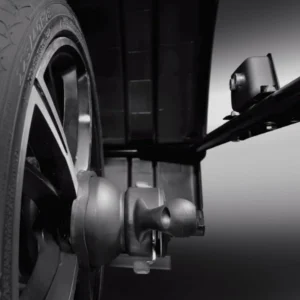
Professional Diagnostic Tire Balancing Machine for Demanding Wheel Service
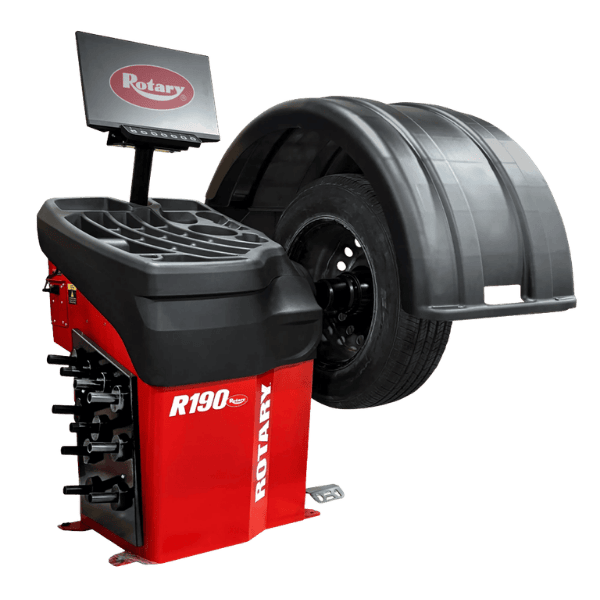
The Rotary® R190 Tire Balancing Machine is designed for professional automotive shops that need more information from the balancing process than a conventional wheel balancer can provide.
Traditional wheel balancing identifies and corrects weight imbalance, but weight imbalance is not the only condition that can contribute to a vibration complaint. A wheel and tire assembly can be properly balanced and still have physical runout that affects ride quality.
That is where the R190 provides an important step forward.
Rotary positions the R190 as its Master Diagnostic Wheel Balancer, engineered to diagnose and map runout, balance wheel assemblies, and support match mounting to help technicians address wheel-vibration concerns. Shops researching the technology can also review the R190 directly from Rotary Solutions.
For tire shops, dealership service departments, premium automotive repair facilities, performance shops, and other businesses that regularly troubleshoot wheel and tire vibration, the R190 turns the balancing process into a more complete diagnostic workflow.
If your shop primarily needs fast, accurate conventional balancing rather than advanced vibration diagnostics, compare the R190 with Shop Equipment USA’s full selection of wheel balancers.
Diagnose the Vibration — Don't Just Balance the Wheel
One of the most important differences between the R190 and a conventional wheel balancing machine is what happens when adding or repositioning wheel weights does not completely resolve the customer’s concern.
A customer may report:
- Steering-wheel vibration at highway speeds
- A vibration that remains after the wheels were balanced
- A new vibration following tire installation
- Ride-quality concerns at a specific speed
- A wheel that measures balanced but still does not feel right on the vehicle
Repeatedly performing the same conventional balance may not identify a condition related to the physical characteristics of the tire and wheel assembly.
The R190 is designed to give technicians additional diagnostic information by combining traditional wheel balancing with runout diagnosis, runout mapping, and match mounting.
For a professional shop, the value is straightforward: rather than simply knowing where weight needs to be added, the technician gains additional information that can help determine why the wheel and tire assembly may still be contributing to a vibration.
Diagnostic Runout Mapping Helps Identify More Than Weight Imbalance
Runout is variation in a wheel or tire as the assembly rotates. When excessive, that variation can contribute to vibration or ride-quality concerns even when the assembly’s weight imbalance has been corrected.
The Rotary R190 is designed to diagnose and map runout as part of its diagnostic balancing process.
That capability gives technicians another layer of information when evaluating a difficult wheel and tire assembly.
For shops that routinely work through vibration complaints, this can help reduce guesswork and provide a more methodical diagnostic process before repeatedly rebalancing an assembly or determining that a wheel or tire may require further attention.
This is one of the primary reasons to choose the R190 over a conventional tire balancer machine.
This matters for both independent shops and dealerships. Independent shops need equipment that does not slow down the bay or require excessive training. Dealership service departments need equipment that supports repeatable processes across multiple technicians, advisors, shifts, and RO volume.
Rotary highlights the R160’s 22″ monitor with keypad and notes that the durable touch pad is linked directly to the standard color monitor while helping protect the monitor from grease and grime.
Match Mounting Helps Optimize the Tire and Wheel Assembly
The R190 includes Match Mount functionality, allowing the technician to evaluate the relationship between the tire and wheel and reposition the tire on the rim when appropriate.
Instead of treating the tire and wheel as completely independent components, match mounting can help create a more favorable wheel and tire assembly.
The process can help technicians:
- Optimize the tire-to-wheel relationship
- Minimize corrective weight requirements
- Address certain vibration-related conditions
- Improve the final wheel and tire assembly
- Reduce unnecessary repeat balancing attempts
For shops installing premium tires, expensive aftermarket wheels, low-profile tire packages, or factory wheel and tire assemblies on higher-end vehicles, the ability to perform a more comprehensive balancing procedure can become an important part of the service experience.
3D Automatic Dimensioning with Sonar + Laser Technology
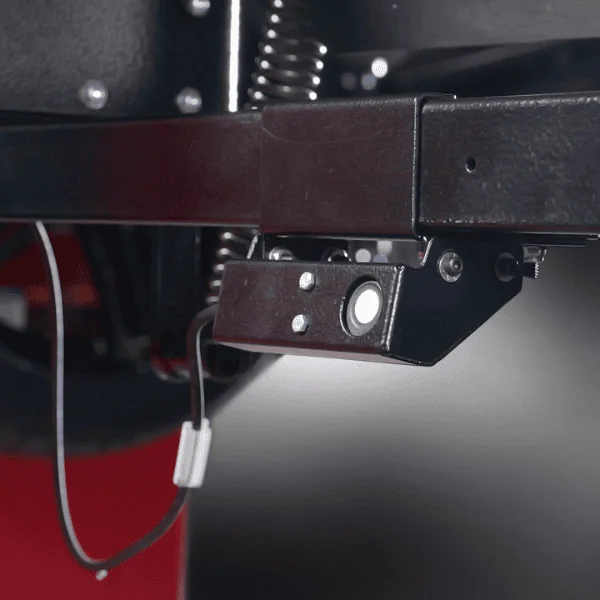
Accurate wheel measurements are essential to an efficient balancing process. The Rotary R190 tire balancing machine uses an automated measurement system to collect wheel-dimension information while reducing the amount of manual setup required from the technician.
By combining advanced sensing and scanning technology, the R190 helps streamline wheel setup and gives technicians the dimensional information needed to begin the balancing process with less manual input. This is particularly valuable in busy tire shops, dealerships, and repair facilities where multiple wheel assemblies may move through the balancing bay every day.
Automated Rim Profile Scanning
The R190’s rim-profile scanning system helps capture information about the wheel as part of the automatic measurement process. Instead of relying entirely on manual measurements, the system is designed to make setup faster and more repeatable from one wheel assembly to the next.
For a professional shop, increased automation can help:
- Reduce manual measurement steps
- Improve consistency between technicians
- Simplify setup for different wheel configurations
- Support faster movement from wheel mounting to balancing
- Reduce opportunities for manual data-entry errors
Automatic Rim Width Measurement
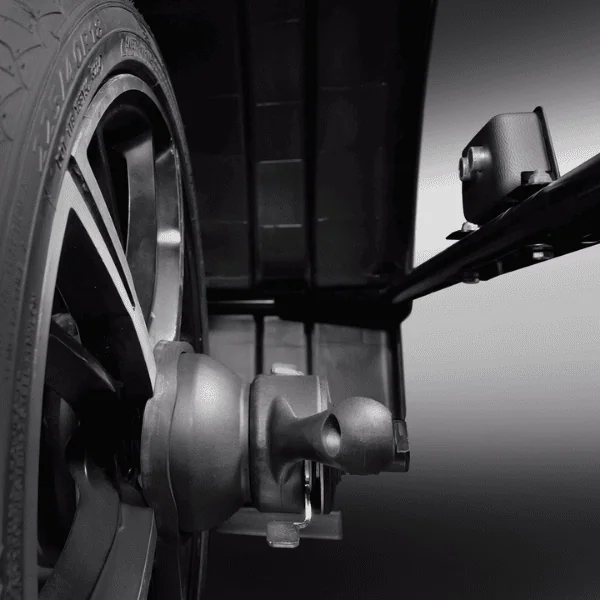
The R190 also uses sensor technology to help determine wheel dimensions automatically. Automating rim-width measurement further reduces the amount of information the technician must manually collect and enter before performing a balance.
This can be particularly useful when technicians are servicing a wide variety of passenger vehicle, SUV, light-truck, luxury, and performance wheel packages throughout the day.
The objective is not simply convenience. Consistent dimensional measurement supports a more standardized balancing workflow regardless of which trained technician is operating the machine.
Sonar-Assisted Automatic Wheel Measurement
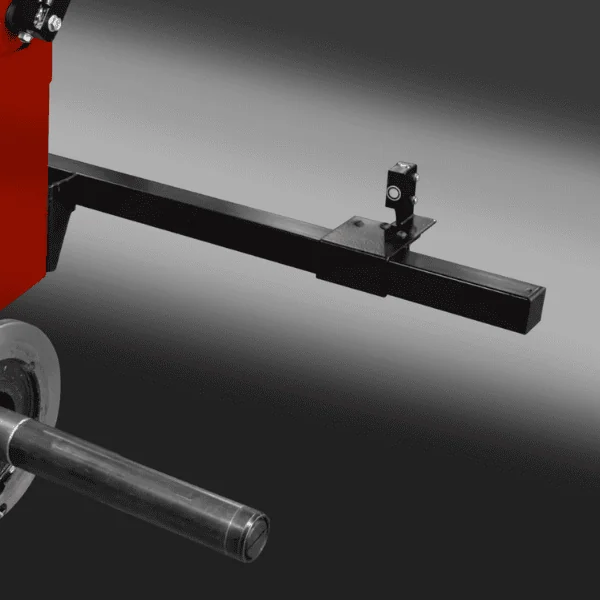
The R190’s sonar sensor adds another automated measurement capability to the wheel-balancing process. The sensor works with the machine’s measurement system to collect wheel information without requiring the technician to manually measure every dimension.
For high-volume operations, these automated functions can translate into a simpler process:
Mount the wheel assembly.
- Allow the R190 to collect the required dimensional information.
- Perform the balancing and diagnostic process.
- Follow the machine’s guidance for the required corrections.
That combination of automation and diagnostics is a key reason the R190 is better suited to demanding professional wheel service than a basic wheel balancer machine.
Advanced TechView Interface Guides the Balancing Process
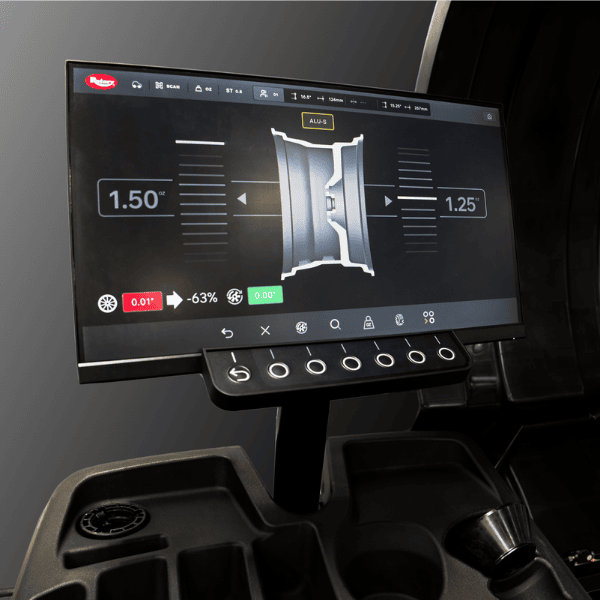
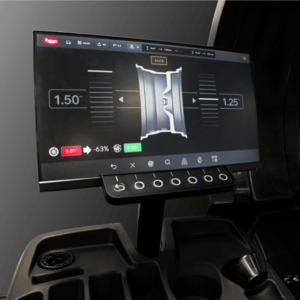
Advanced diagnostic equipment is most valuable when technicians can quickly understand and act on the information it provides. The Rotary R190 features a large TechView interface that presents wheel-balancing information visually and helps guide the technician through the balancing process.
Rather than forcing the operator to interpret basic numerical readouts alone, the interface displays balancing information alongside a graphical representation of the wheel. This gives technicians a clearer view of the correction requirements and helps make the R190’s advanced capabilities easier to incorporate into everyday service.
Clear Balancing Information at the Machine
As shown on the R190 interface, technicians can view the required corrective weight for the inboard and outboard sides of the wheel along with a visual representation of the selected wheel configuration.
Putting this information directly in front of the operator can help:
- Make balancing results easier to interpret
- Clearly communicate corrective weight requirements
- Guide technicians through the balancing workflow
- Reduce dependence on memorizing complicated procedures
- Support more consistent operation between technicians
- Make advanced wheel service easier to standardize within the shop
This is particularly valuable in operations where several employees use the same tire balancer machine.
A dealership, tire center, or multi-technician repair shop may have experienced wheel-service specialists as well as newer technicians performing routine balancing. A clear visual interface can help the shop establish a more repeatable process across that range of experience.
Advanced Capability Without an Overly Complicated Workflow
The R190 is designed as a diagnostic wheel balancer, but that does not mean every balancing procedure should require a highly specialized operator.
Its combination of automatic measurement, onscreen guidance, and visual balancing information helps make advanced wheel-service technology practical in a working service bay.
For the shop owner, that means the investment is not limited to what one highly experienced technician knows how to operate. The goal is equipment that can become part of the shop’s regular wheel-service workflow while providing more diagnostic capability when difficult vibration concerns arise.
Laser-Guided Weight Placement for Precise Balancing
Finding the correct amount of corrective weight is only part of the balancing process. The technician also needs to place that weight in the correct position on the wheel.
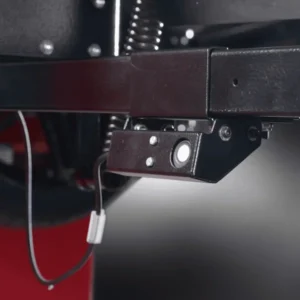
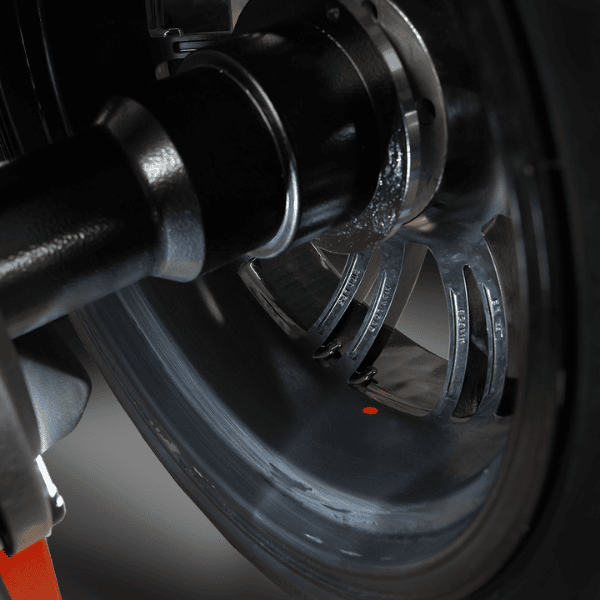
The Rotary R190 uses laser-guided weight placement to help technicians identify the required correction location directly on the wheel. The visible laser provides a precise reference point for adhesive-weight placement, helping reduce guesswork when positioning corrective weights inside the rim.
This is especially valuable when working with modern alloy wheels where adhesive weights may be positioned inside the wheel rather than using traditional clip-on weights along the outer flange.
See Exactly Where the Corrective Weight Goes
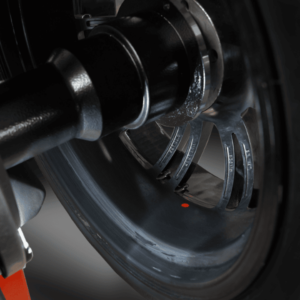
The laser-guided system provides the technician with a visible reference at the wheel itself. In the image above, the red laser point identifies the correction location inside the rim.
That helps turn the balancing result displayed by the machine into a clear physical action for the technician.
Benefits include:
- More precise adhesive-weight positioning
- Less searching for the correction location
- A simpler technician workflow
- Greater consistency when placing hidden adhesive weights
- Easier service of modern alloy wheels
- Reduced unnecessary wheel rotation during correction
For shops balancing premium and performance wheels, precise adhesive-weight placement also helps maintain a cleaner finished appearance by allowing corrective weights to be positioned inside the wheel where appropriate.
Stop-on-Top Positioning Further Streamlines the Process
The R190’s positioning functionality works with the balancing process to help bring the wheel to the required correction position, reducing unnecessary manual rotation of the assembly.
Combined with the visual information on the TechView interface and laser-guided weight placement, the workflow becomes straightforward:
- The R190 measures and evaluates the wheel assembly.
- The interface identifies the required correction.
- The wheel is positioned for weight installation.
- The laser identifies the weight-placement location.
- The technician installs the corrective weight and verifies the balance.
For a high-volume shop, reducing small manual steps on every wheel can contribute to a more efficient balancing process throughout the day.
More importantly, the combination of automatic measurement, visual technician guidance, and laser-guided weight placement helps make the R190’s advanced balancing capabilities practical for everyday professional use.
Built to Handle a Broad Range of Modern Wheel Sizes
The Rotary R190 provides substantial wheel-size coverage for professional automotive service.
R190 Wheel and Tire Capacity
- Minimum rim diameter: 10″
- Maximum rim diameter: 30″
- Maximum tire diameter: 44″
- Shaft diameter: 40 mm
- Measuring tolerance: .002 lbs.
The 10″–30″ rim range makes the R190 suitable for a wide variety of modern automotive wheel applications, including many of the larger-diameter wheel packages increasingly encountered by professional repair shops, tire centers, dealerships, and performance shops.
Included 8-Piece Collet Kit for Wheel Centering
Accurate wheel centering is fundamental to accurate wheel balancing.
The Rotary R190 includes an 8-piece collet kit, giving technicians multiple centering options for different wheel center-bore configurations.
For a professional shop, an expanded centering package adds value because it helps the shop accommodate a broader range of wheels without immediately purchasing additional basic centering equipment.
Proper mounting also supports repeatability—a critical consideration when diagnosing a difficult vibration rather than performing only a routine balance.
Who Is the Rotary R190 Designed For?
The R190 is a premium diagnostic wheel balancer. It should be purchased because a shop can use its additional capabilities—not simply because it is the newest Rotary model.
High-Volume Tire Shops
Tire shops performing wheel service throughout the day have greater exposure to difficult balancing situations, vibration complaints, new tire installations, and repeat service.
For these businesses, adding runout diagnostics and match mounting to the balancing process provides capabilities beyond a standard wheel balance.
Dealership Service Departments
Dealership customers often have high expectations for ride quality, particularly on newer vehicles.
When a customer reports a persistent vibration, a diagnostic wheel balancer gives the technician more information about the wheel and tire assembly before resorting to repeated conventional balancing.
European, Luxury and Performance Repair Shops
Shops servicing premium and performance vehicles frequently encounter:
- Larger-diameter wheels
- Low-profile tires
- Performance tire packages
- Expensive factory wheels
- Aftermarket wheel packages
- Customers with high ride-quality expectations
For these shops, advanced wheel diagnostics can complement a premium service experience.
Custom Wheel and Tire Shops
Customers investing significantly in wheels and tires expect the finished vehicle to drive as well as it looks.
The R190 provides these shops with an additional diagnostic tool when balancing premium, performance, or difficult wheel and tire combinations.
Multi-Technician and Multi-Location Repair Operations
Automatic measurement, data entry, and a guided touchscreen workflow can also benefit businesses trying to establish a consistent wheel-service process across technicians.
When Is the R190 Worth the Upgrade?
Not every shop needs a diagnostic balancer.
The R190 makes the most sense when the shop needs to diagnose wheel and tire assemblies as well as balance them.
Consider the R190 if your shop:
- Performs significant tire and wheel service
- Regularly encounters vibration complaints
- Performs repeat balancing on difficult assemblies
- Services premium, luxury, or performance vehicles
- Works frequently with larger or expensive wheel packages
- Wants diagnostic runout mapping
- Wants Match Mount functionality
- Has multiple technicians operating the wheel balancer
- Places a high value on reducing balancing-related rework
- Wants to expand its premium wheel-service capabilities
If your primary objective is fast, accurate everyday balancing without the R190’s diagnostic emphasis, the Rotary R160 Wheel Balancer may offer a better fit.
For shops looking for a premium automated balancing workflow with advanced wheel scanning, also compare the Rotary R180 Pro 3D Wheel Balancer.
Rotary R160 vs. R180 vs. R190: Which Wheel Balancer Is Right for Your Shop?
Rotary offers several professional balancers because different shops have different wheel-service requirements.
Rotary R160 — Advanced Everyday Wheel Balancing
The Rotary R160 is a strong choice for shops that prioritize fast, technician-friendly balancing. It incorporates 3D automatic data entry, sonar rim-width measurement, guided balancing software, laser weight positioning, and automatic indexing.
Best fit: Professional repair shops, tire centers, and dealerships primarily focused on efficient everyday wheel balancing.
Rotary R180 — Premium Automated Wheel Balancing
The Rotary R180 Pro 3D adds a premium automated balancing workflow with no-touch 3D data entry, automatic wheel-dimension sonar, a laser rim-profile scanner, and precise weight-placement features.
Best fit: Higher-volume shops looking for a premium, highly automated conventional balancing solution.
Rotary R190 — Diagnostic Wheel Balancing
The R190 moves the purchase decision beyond conventional balancing by adding its core diagnostic proposition: diagnose runout, map runout, balance, and match mount.
Best fit: Shops that regularly diagnose vibration complaints or want a more advanced diagnostic wheel-service process.
The simplest way to choose:
Choose the R160 when your priority is efficient professional balancing.
Choose the R180 when your priority is premium automation and advanced wheel scanning.
Choose the R190 when your priority is diagnostic balancing and vibration troubleshooting.
Still unsure? Contact Shop Equipment USA and our equipment team can help determine which Rotary wheel balancer best fits your service volume, vehicle mix, and budget.
Why Invest in a Diagnostic Wheel Balancer?
The value of the R190 is not simply that it has more features.
The investment makes sense when those features help improve the shop’s actual wheel-service process.
Help Reduce Repeat Balancing Attempts
A technician with additional diagnostic information can make a more informed decision when conventional balancing alone does not resolve the customer’s complaint.
Add More Diagnostic Capability to the Wheel-Service Bay
Rather than limiting the machine to weight correction, the R190 gives the shop additional tools for evaluating wheel and tire runout and optimizing the assembly through match mounting.
Support Premium Wheel and Tire Service
For shops serving customers with expensive tires, premium vehicles, or performance wheel packages, advanced wheel-service capability can help differentiate the shop from providers offering only basic balancing.
Improve Technician Consistency
Automatic rim measurement, automatic data entry, and guided operation help reduce the amount of manual setup required from one technician to another.
For a shop performing enough wheel service to use these capabilities regularly, the R190 can become a diagnostic and productivity investment rather than simply another piece of tire equipment.
Build a Complete Professional Wheel-Service Bay
A balancer is only one component of an efficient tire-service workflow.
Pair the R190 with the appropriate professional Rotary tire changer to create a more complete wheel-service bay for mounting, demounting, and balancing today’s wheel and tire assemblies.
Shop Equipment USA also carries a complete selection of professional wheel balancers for shops that need a different balance of features, automation, and investment.
Warranty and Support
Rotary wheel service equipment carries a 3-year parts warranty and 1-year labor warranty, with details available through Rotary and authorized distributors.
For additional manufacturer information, visit Rotary’s official wheel balancers page. Rotary describes its wheel balancer lineup as ranging from value-priced models to advanced laser-scanning solutions built to improve shop productivity.
Why Buy the Rotary R190 From Shop Equipment USA?
Choosing the right wheel-service equipment involves more than comparing specifications.
Shop Equipment USA helps professional shops evaluate equipment based on their actual service mix, shop volume, available space, and business needs.
Whether you are replacing an existing balancer, upgrading an active tire-service bay, or outfitting a new shop, our equipment team can help you compare the R190 with other Rotary wheel-service options before you purchase.
Contact Shop Equipment USA for help selecting the right balancer for your operation.
Rotary R190 Frequency Asked Questions
The Rotary R190 is a professional diagnostic tire balancing machine designed to balance wheel and tire assemblies while also helping technicians diagnose and map runout and perform match mounting.
A conventional wheel balancer primarily measures and corrects weight imbalance. The R190 adds diagnostic runout mapping and Match Mount functionality, giving technicians additional information when evaluating wheel and tire assemblies.
Yes. Rotary specifically positions the R190 Master Diagnostic Wheel Balancer to diagnose and map runout as part of its balancing and match-mounting workflow.
Yes. The Rotary R190 includes a Match Mount feature to help optimize the relationship between the tire and wheel.
Yes. The R190 automatically measures rim dimensions and includes automatic data entry.
The R190 supports rim diameters from 10" to 30" and tires up to 44" in diameter.
The Rotary R190 uses a 40 mm shaft.
The R190 includes an 8-piece collet kit.
The R190 should not be described as a Road Force balancer. The R190 provides diagnostic runout mapping, wheel balancing, and Match Mount functionality. “Road Force” refers to a different loaded-wheel diagnostic methodology and should not be used interchangeably with the R190's capabilities.
The R190 is particularly suited to professional tire shops, dealership service departments, premium automotive repair shops, performance and custom wheel facilities, and other operations that regularly perform wheel service or investigate vibration complaints.
Choose based on the work your shop actually performs. The R160 is designed around fast, highly automated professional wheel balancing. The R190 is better suited to shops that also need diagnostic runout mapping and match mounting for vibration-related wheel service.
The R180 is a premium automatic 3D wheel balancer with advanced scanning and weight-placement technology. The R190 is differentiated by its diagnostic focus on runout mapping and match mounting.


Reviews
There are no reviews yet.