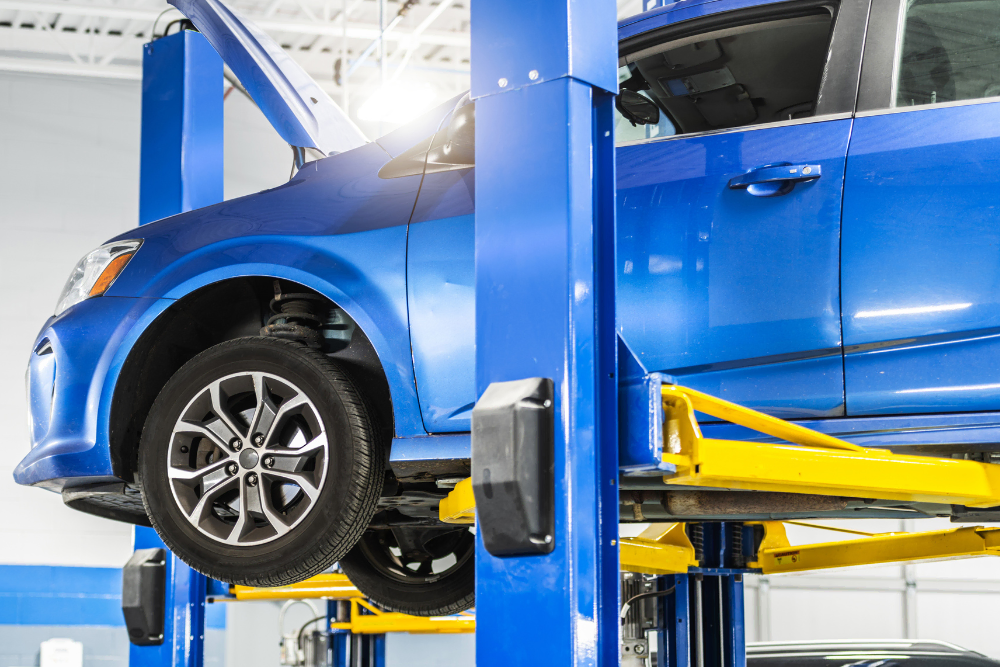


Ceiling height is usually the single biggest constraint when shopping for a home garage car lift, and getting your car lift ceiling height measurement wrong is one of the most common reasons a lift purchase turns into a return. Before you compare lift models, brands, or prices, you need an accurate number for how much vertical clearance your garage actually offers.
This guide walks through exactly how to measure car lift ceiling height correctly, what the typical minimums are for different lift types, and what your options are if your garage ceiling is lower than you’d like. Requirements vary by lift model, so always confirm the exact clearance needed against the manufacturer’s specifications before you buy.
Quick Answer
In short, most two-post lifts need 11 to 12 feet of ceiling clearance to fully raise a vehicle, four-post lifts often need slightly less, and low-ceiling or portable options can work with as little as 9 to 10 feet. Your exact car lift ceiling height requirement depends on the specific lift model, so treat these as planning ranges, not guarantees.
Why Car Lift Ceiling Height Matters
Ceiling height determines which lifts are even physically possible in your garage, before you even get to features, price, or brand. A lift that cannot fully rise without hitting the ceiling, a light fixture, garage door track, or roof truss is not just inconvenient — it can be a safety hazard and may violate the manufacturer’s installation requirements entirely.
Unlike floor space or electrical service, ceiling height is usually the hardest constraint to change after the fact. Raising a garage roofline is a major construction project, while most other requirements can be adjusted with planning. That is why measuring car lift ceiling height accurately should be one of the first steps in any home garage lift purchase, not an afterthought.
It’s also worth thinking beyond your current vehicle. If you expect to own a taller truck or SUV in the future, or if a future buyer of your home might want to use the same lift, choosing a lift with a margin above your minimum car lift ceiling height requirement can prevent an expensive replacement later. A little extra clearance rarely hurts, while too little clearance can rule out an otherwise perfect lift entirely.
How to Measure Your Garage Ceiling Height
- Identify the lowest point in your garage ceiling directly above where the lift will sit — this is often a light fixture, sprinkler head, garage door track, ceiling fan, or roof truss rather than the flat ceiling itself.
- Measure straight up from the floor to that lowest point using a tape measure or laser measure, not an estimate. Record the number in both feet and inches for accuracy.
- Repeat the measurement in two or three spots across the planned lift footprint, since garage ceilings are not always perfectly level.
- Subtract a safety margin, typically 2 to 4 inches, to account for the vehicle’s height and the lift’s fully raised height, not just the lift structure itself.
- Compare your final number against the manufacturer’s minimum ceiling height specification for the exact lift model you are considering, not just the general category.
Tools You Will Need to Measure Accurately
Getting an accurate car lift ceiling height measurement doesn’t require special equipment, but using the right tools makes a real difference in accuracy.
- A laser measure or a sturdy tape measure at least 16 feet long, so you don’t have to estimate or combine multiple shorter measurements.
- A stepladder tall enough to reach the ceiling safely, since eyeballing the distance from the floor is not accurate enough for a purchase decision.
- A notepad or phone to record measurements from each spot you check, along with a note of exactly what obstruction you measured to (light fixture, truss, door track, etc.).
- A helper, if possible, to hold one end of the tape measure steady while you read the number — this reduces the small errors that add up over a 10+ foot measurement.
Minimum Ceiling Height by Lift Type
| Lift Type | Typical Minimum Ceiling Height | Notes |
|---|---|---|
| Two-Post Lift | 11–12 ft | Varies by model and vehicle height when raised |
| Four-Post Lift | 10–11 ft | Some storage-focused models fit lower ceilings |
| Mid-Rise Scissor Lift | 9–10 ft | Popular choice for low-ceiling garages |
| Portable / Rolling Lift | 8–9 ft | Lower rise height limits full vehicle clearance |
Common Ceiling Height Measuring Mistakes
The most common car lift ceiling height mistake is measuring the flat ceiling instead of the lowest obstruction, such as a light fixture or garage door track. Another frequent error is forgetting to add the vehicle’s own height on top of the lift’s rise, which can add another 4 to 5 feet for a raised truck or SUV. Skipping a second or third measurement point is also risky, since many garages have slightly uneven ceilings or sloped rooflines that a single measurement won’t catch.
One more detail worth double-checking: garage door tracks and openers often hang lower than the surrounding ceiling, especially near the front of the garage. If your lift will sit close to the door, measure clearance at that specific point too, not just toward the back of the garage where ceilings are sometimes higher. This is a common blind spot even for homeowners who otherwise measure carefully.
What to Do If Your Ceiling Is Too Low
If your measured car lift ceiling height falls short of what a two-post or four-post lift requires, you still have workable options. Mid-rise scissor lifts, low-ceiling two-post models, and portable lifts are all designed around reduced clearance needs. Our best car lift for a low-ceiling garage guide goes deeper into which specific models work best when overhead clearance is limited.
Planning Ahead
It’s also worth measuring before you finalize a garage door opener, ceiling storage rack, or overhead shelving installation. These additions are easy to plan around ahead of time but expensive and disruptive to move once installed, and they directly affect the usable car lift ceiling height in your garage.
For a complete picture of every other garage factor beyond ceiling height, including concrete, electrical, and floor space, see our garage requirements checklist and the Home Garage Car Lift Guide. For general lift safety standards, the Automotive Lift Institute‘s ALI Gold Label certification program is a useful independent reference when comparing lift models.
Not sure what your measurements mean for lift selection? Contact our team and we can help you match your garage’s car lift ceiling height to the right lift model.
Bringing a printed or photographed copy of your car lift ceiling height measurements when you shop, whether in person or online, also makes the process faster. Many manufacturers and dealers can quickly tell you which models will and won’t fit once they know your exact clearance number, saving you from comparing dozens of lifts manually.
FAQs
What is the minimum car lift ceiling height for a two-post lift?
Most two-post lifts need roughly 11 to 12 feet of clearance to fully raise a vehicle, though the exact car lift ceiling height requirement varies by model. Always check the manufacturer specifications for your specific lift.
How do I measure ceiling height for a car lift?
Measure straight up from the floor to the lowest point in your garage ceiling above the lift’s footprint — usually a light fixture, sprinkler head, or garage door track — not the flat ceiling itself. Take the measurement in two or three spots and subtract a safety margin of a few inches.
Do four-post lifts need less ceiling height than two-post lifts?
Often, yes, but it depends on the specific model. Some four-post lifts, especially storage-focused designs, are built for slightly lower ceilings, but you should always confirm against the manufacturer’s listed requirements rather than assuming.
What can I do if my garage ceiling is too low for a standard lift?
Consider a mid-rise scissor lift, a low-ceiling two-post model, or a portable rolling lift, all of which are designed for reduced overhead clearance. Professional installation is strongly recommended so an installer can confirm what fits your exact space.
Does the height of my vehicle affect ceiling height requirements?
Yes. You need to account for both the lift’s rise and the height of the vehicle once it’s raised, especially for taller trucks and SUVs. This can add several feet beyond the lift’s own structure.
Should I hire a professional to measure before buying a lift?
While you can take an initial measurement yourself, professional installation is strongly recommended for the final confirmation and the actual installation, since ceiling obstructions and structural factors are not always obvious.